
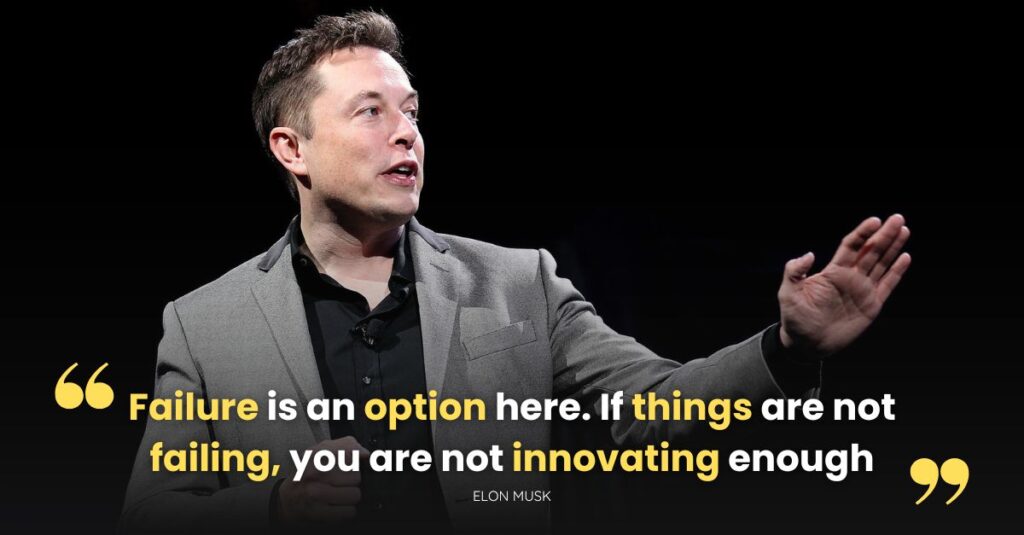
THE MAN WHO REFUSED TO STOP BUILDING
The Boy Who Dreamed in Silence
Elon Reeve Musk was born on June 28, 1971, in Pretoria, South Africa — a place known for sun, steel, and silence.
His mother, Maye, was a Canadian model and dietitian — graceful yet strong. His father, Errol, was an engineer — brilliant, but stern and complex. Between the two, Elon inherited beauty and logic, but also an emotional distance that would later turn into his greatest strength: detachment.
From the very beginning, he was different. While most children chased noise, Elon sought quiet — quiet rooms, quiet books, quiet ideas. He could disappear into thought so deeply that his parents once took him to doctors to check his hearing. The truth was simpler: he was just thinking too loudly inside his own head.
Books were his first universe. He devoured entire shelves — from The Lord of the Rings to The Hitchhiker’s Guide to the Galaxy. These stories planted a strange belief in him: that the world could be fixed, and it might take someone foolish enough to try.
But the world around him wasn’t kind.
He was bullied in school — beaten so badly once that he ended up in the hospital. His home wasn’t a refuge either; his father’s temper was unpredictable.
Most would have cracked under that pressure. Elon built a wall inside instead — a cold, logical fortress.
It wasn’t numbness; it was armor.
When he was twelve, that armor turned into creation.
Using an old computer, he coded a simple space-themed video game called Blastar — and sold it to a magazine for $500. It was the first proof that imagination could be monetized, and that even pain could be programmed into something valuable.
That’s when Elon discovered a life rule that would guide him forever:
“If you can’t find comfort, build it.”
The Escape Artist
By seventeen, Elon had outgrown South Africa — not physically, but mentally.
He saw the political tension, the military draft, the social cage of apartheid. He knew he didn’t belong there.
He wanted to be where ideas mattered more than bloodlines.
So, with almost nothing but ambition and a passport through his mother’s Canadian heritage, he left home.
No guarantees. No safety net. Just the instinct that the world is bigger than fear.
In Canada, he worked odd jobs — shoveling grain, cleaning boilers, anything that kept him alive. Nights were spent dreaming about physics and the stars.
Eventually, he joined Queen’s University, and later transferred to the University of Pennsylvania, where he earned two degrees — one in Physics, one in Economics.
Physics taught him how the universe works.
Economics taught him how humans move.
Together, they formed the twin lenses through which he would later bend reality.
After graduation, he was accepted into a Ph.D. program at Stanford University. But two days in, he dropped out.
Not because he failed — but because the internet was exploding, and he could feel it: the next revolution had already begun.
He didn’t want to study energy. He wanted to create it.
The Code of Survival
It was 1995. Silicon Valley was a storm of caffeine, chaos, and courage. Elon and his brother Kimbal Musk started Zip2 — an online city guide for newspapers.
They couldn’t afford rent, so they lived in the office.
They showered at the YMCA.
They coded 20 hours a day, slept on beanbags, and pitched to investors with borrowed suits.
The company grew — slowly, painfully — until it caught the attention of Compaq, which bought Zip2 in 1999 for $307 million.
Overnight, Elon was a millionaire.
But instead of celebrating, he did something bizarre: he started another company the same month.
That company was X.com, an online financial service. The idea was wild for the late 90s — transferring money by email? Nobody trusted it.
But Elon believed that the future always starts as a joke.
X.com eventually merged with another company and became PayPal.
By 2002, it was acquired by eBay for $1.5 billion. Musk’s share was around $180 million.
That could’ve been the end of the story — but for Elon, it was just a refueling stop.
He now had money, freedom, and vision — the three most dangerous ingredients in the hands of someone who doesn’t fear failure.
The $1 Rule
Before diving into his next ventures, Musk ran an experiment — one that would define his mental toughness for life.
He wanted to test how little he needed to survive. So he set himself a challenge:
“Can I live on $1 a day?”
He bought bags of hot dogs, spaghetti, and orange juice. He repeated this routine for a month.
He didn’t do it to save money — he did it to destroy fear.
If he could survive on nothing, then failure had no power over him.
That single mental shift became his ultimate weapon.
Years later, when he’d risk all his fortune on SpaceX and Tesla and almost go bankrupt, that memory — of surviving on a dollar a day — kept him calm.
It taught him that comfort isn’t success. Survival is the seed of audacity.
Chapter 5: The Rocket Man
After selling PayPal, Musk could’ve retired forever. Instead, he looked at humanity — and felt bored.
We weren’t exploring. We weren’t dreaming. We were settling.
So, he decided to bring back the impossible: space travel.
In 2002, he founded SpaceX (Space Exploration Technologies).
His goal wasn’t profit. It was legacy: to make humans a multi-planetary species.
Experts mocked him. “You can’t compete with NASA,” they said. “You’ll blow up rockets and your money.”
They were right about one thing: the rockets did blow up.
The first failed. Then the second. Then the third.
Millions lost. Faith shattered.
Elon had one rocket left — and one shot before bankruptcy.
He poured in his last remaining funds and launched.
That fourth rocket flew perfectly.
The same week, NASA signed a contract with SpaceX.
The world called it luck. Musk called it iteration.
That day, Elon didn’t just launch a rocket — he launched the idea that private individuals could reach the stars.
The Electric Messiah
While SpaceX fought gravity, another battle was brewing on Earth — fossil fuels.
Musk saw cars as the next revolution. He invested in a small company called Tesla Motors.
Their mission was bold: to make electric cars that didn’t feel like punishment.
The early years were brutal.
Factories stalled. Prototypes failed. Investors panicked. The company was days away from bankruptcy.
At one point, Elon wired his last personal millions into Tesla’s payroll just to keep employees paid.
He worked day and night — sleeping in the factory, debugging production lines himself.
Critics called him delusional.
But that’s the thing about visionaries — their delusion often becomes the world’s reality.
By 2013, Tesla had turned the tide. Its Model S won awards, broke records, and changed the perception of electric cars forever.
Tesla wasn’t just building vehicles — it was building the future’s operating system.
The Architect of Chaos
When most people would slow down, Musk sped up.
He founded SolarCity to harness solar energy.
He started The Boring Company to reinvent underground transport.
He launched Neuralink to merge human brains with AI.
And Starlink, to bring internet from space to Earth.
Each idea sounded insane — until it wasn’t.
That’s the recurring pattern of Musk’s life: insanity is the raw material of progress.
He built companies like a chess player sets traps — always thinking ten moves ahead.
While people analyzed, he executed.
While the world laughed, he launched.
Every failure became data. Every insult became fuel.
He didn’t chase balance; he chased momentum.
The Method Behind the Madness
Beneath the chaos, there’s a system to Musk’s genius — a mental code made of three rules:
- Think in first principles, not formulas.
Break every problem down to physics and logic. Ignore tradition. Start from zero. - Compress time.
If something takes ten years, figure out how to do it in two. Musk’s timeline is always shorter than comfort allows. - Use pain as propulsion.
He doesn’t avoid difficulty; he feeds on it. Each obstacle becomes oxygen.
That’s why, despite burnout, controversy, and sleeplessness, Musk remains unstoppable. He doesn’t run on happiness — he runs on purpose.
The Legacy of Fire
Today, Elon Musk’s fingerprints are on everything — from the cars on highways to the satellites above Earth.
He’s not just an entrepreneur; he’s an era.
He changed what we expect from business, technology, and even human potential.
He made it normal to question what’s impossible.
But here’s the real paradox:
He’s not driven by money, or fame, or even success. He’s driven by fear — not fear of failure, but of wasted potential.
He once said,
“I would like to die on Mars, just not on impact.”
That sums him up perfectly — a man who knows he’ll burn out on the way to greatness, but lights the match anyway.
The Builder’s Code
Elon Musk’s life is proof that genius is not born — it’s constructed, failure by failure.
It’s proof that comfort kills potential, and chaos can be holy if you learn to navigate it.
He taught the world that:
- Curiosity is the first currency of creation.
- Risk is not the enemy; routine is.
- To change the world, you must first stop needing its approval.
He’s not perfect. He’s messy, stubborn, human. But he’s awake — and that’s rarer than genius.
Because while most people spend their lives trying to live safely, Elon Musk has spent his life trying to expand life itself.